

A few weeks ago, I published a podcast episode featuring Adrian Gomez, an American who has spent years trying to develop professional wrestling in China.
I know professional wrestling is a niche interest, especially in China. But I think Adrian’s story touches on themes that go well beyond the industry itself, and deserves to be heard by a wider audience.
I later wrote a feature for Xinhua News Agency about Adrian and the development of professional wrestling in China. While working on the story, I interviewed several others involved in the scene, including two Chinese wrestlers, an American wrestler competing in China, and a longtime Chinese fan.
I found their answers fascinating. Given the length and focus of the news feature, I could only draw on part of our conversations. With their permission, I’m sharing the four interviews in full here.
Before getting to them, I’d like to share something Adrian told me after the podcast conversation. When I asked how his 16 years in China had shaped his understanding of the country, he offered an answer that I think helps explain why this story is about more than professional wrestling:
I think it would take a lifetime to truly understand China, and I don’t pretend I ever will. I simply get better at navigating it, which I suppose is a form of understanding.
What I’ve learned is the importance of constant, unwavering respect. When communication barriers arise between Chinese and foreign colleagues, we must approach them from an intercultural perspective, never assuming our own cultural norms should take precedence.
“Chinese pro wrestling” itself is a unique cultural fusion, where we’re combining Chinese culture with an entertainment tradition rooted in American carnivals. Making it work requires mutual respect, and I’ve learned that the shared passion and camaraderie of pro wrestling can — and almost always do — transcend cultural differences towards the goal of giving an amazing show.
The four interviews feature Junjie and Xiao Jiemen, two Chinese pro wrestlers; Zombie Dragon, an American pro wrestler who has competed in China; and Lyu You, a longtime fan and founder of Wrestling Fans’ Home, a nonprofit Chinese online forum dedicated to pro wrestling that has been running since 2005.
Whether you’re simply curious about professional wrestling, interested in what its development might tell us about China, or already a fan of the sport and entertainment, I hope you’ll find something of interest in these conversations.

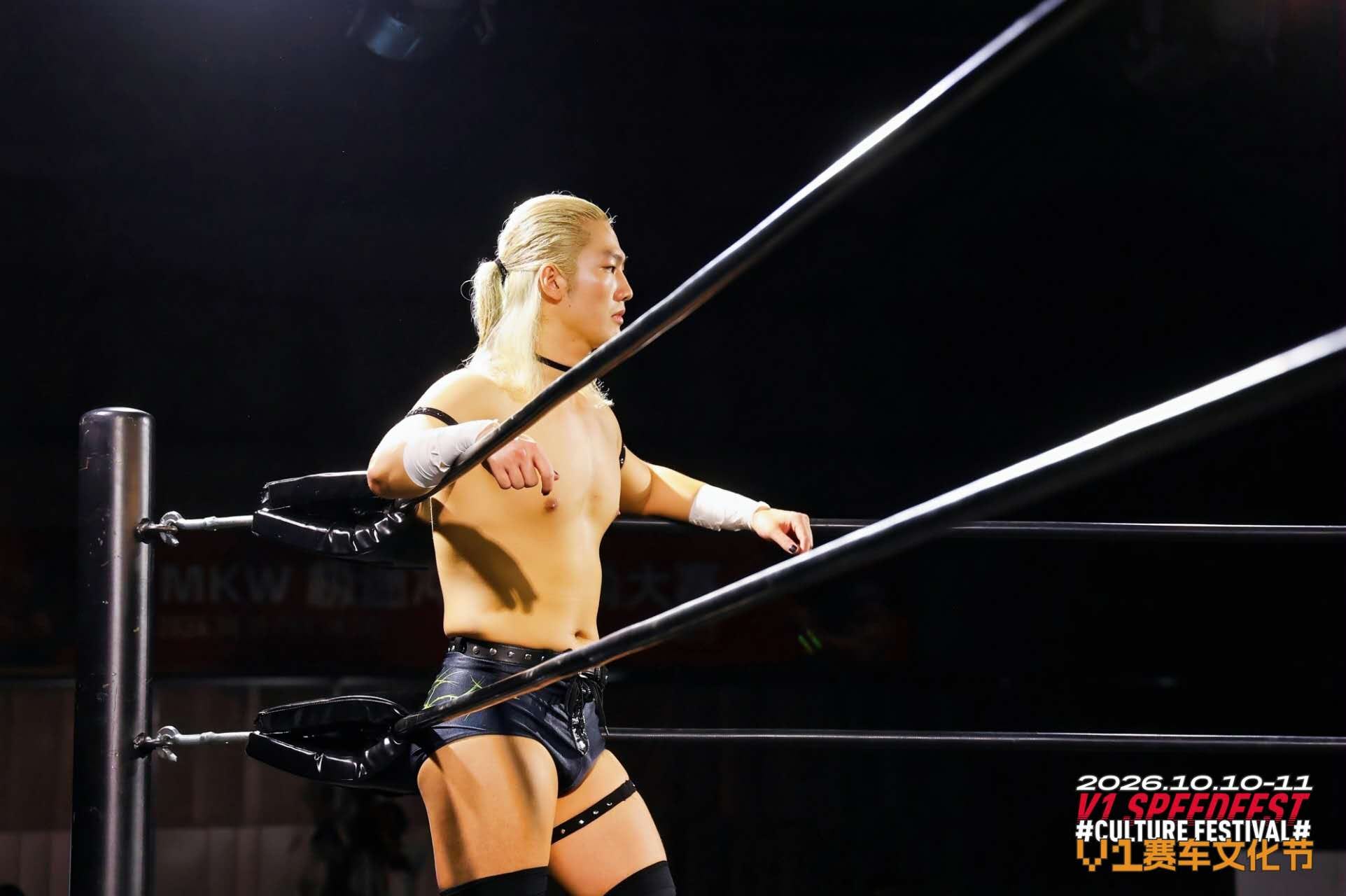
Junjie
(X: @WreslerJUNJIE, Instagram: wrestle_junjie)
1. From a Shaolin Martial Arts School to Professional Wrestling
JJ: Let’s start with your background. When did you first come across professional wrestling? And how did you begin learning Chinese martial arts?
Junjie: There’s something I often tell people: I didn’t choose professional wrestling. Professional wrestling chose me.
Before I became a trainee, I didn’t even know what professional wrestling was. I knew absolutely nothing about the industry.
I was seventeen and in my final year of high school when OWE, Oriental Wrestling Entertainment, came to our school to recruit trainees. The person running the company at the time approached me and asked if I wanted to give professional wrestling a try.
I told him I didn’t even know what it was. He said that if I was interested, I could come to Shanghai for a month’s trial training. If I liked it, I could stay; if I didn’t, I could go back to school and carry on with my studies.
I thought I might as well give it a go, and that was how I got into professional wrestling.
JJ: So you hadn’t actively chosen this career because you were a fan of WWE or other wrestling shows?
Junjie: That’s right. Before that, I knew nothing at all about professional wrestling.
JJ: What about your background in Chinese martial arts? I understand you studied at a martial arts school near the Shaolin Temple. When did you start training?
Junjie: My father practiced martial arts himself. As far back as I can remember, he would often train in the mornings, and sometimes he would teach me a few moves.
I gradually became interested. Before I was even six, I told my family, of my own accord, that I wanted to go to a martial arts school.
I ended up studying there from about the age of six until I was seventeen.
JJ: The school was in Dengfeng, Henan, near the Shaolin Temple on Mount Song, right? Would it be accurate for me to write in my article that you studied Shaolin martial arts?
Junjie: Yes, it was in Dengfeng, right next to the Shaolin Temple. What I studied was indeed Shaolin martial arts, so it would be accurate to say I trained in Shaolin kung fu.
My father also belongs to a Shaolin martial arts lineage. There is a distinction here, though: the abbot of the Shaolin Temple and the head of a Shaolin martial arts lineage are two different roles.
2. The Tianjin Show and the Appeal of Professional Wrestling
JJ: You won the opening match at the Tianjin show on 11 October. What stood out for you about that match? Did anything about the crowd’s response surprise you?
Junjie: To be honest, it was a fairly ordinary match for me.
I’m a full-time professional wrestler now. Wrestling matches is what I do for work, so the experience itself is very familiar to me.
If there was anything special about it, it was probably that this was my first time wrestling in Tianjin, and my first chance to show a Tianjin crowd what I could do.
JJ: So professional wrestling is your full-time job now?
Junjie: Yes. Wrestling matches is how I earn my living now.
JJ: How would you explain the appeal of professional wrestling to someone who knows nothing about it? In particular, if the results and parts of the storyline are planned in advance, why can the wrestlers and the audience still get so caught up in it?
Junjie: What people enjoy about wrestling varies from person to person. Ask a hundred people and you might get a hundred different answers.
Let me start with a story about something I came across myself.
I mostly wrestle in Japan now. Once, a Japanese fan wrote something on X that really moved me.
He had a relative who was autistic and who rarely responded when family members tried to communicate with them. Then this fan took his relative to a live wrestling show.
At first, his relative knew nothing about wrestling either, but gradually they came to enjoy it.
Watching the wrestlers fight with everything they had, getting back up no matter how many times they were knocked down, seemed to bring some hope into this person’s life.
The fan continued coming to shows regularly after that.
That really moved me. Personally, I believe professional wrestling can give people hope. It’s one of the things that has kept me going in wrestling all these years.
JJ: Was this fan watching shows in Japan that you were wrestling in?
Junjie: Yes. I’m based in Japan now, so most of my audience is Japanese.
JJ: From your point of view, then, what does Chinese professional wrestling have to offer foreign audiences?
Junjie: I think professional wrestling has a lot in common wherever you go. The biggest differences between wrestlers are probably their nationalities, wrestling styles and individual characteristics.
Even within Japan, every wrestler has a different style.
But one of wrestling’s greatest attractions is something you may never really understand unless you go to a show yourself.
Watching it live and watching it on video feel completely different. It’s very hard to put that feeling into words.
JJ: Tianjin was my first time seeing a show live, and I felt that too.
Junjie: As for your earlier question about why people can enjoy a match even when they know it’s been planned in advance, I think this is one way to look at it.
Professional wrestling is sports entertainment. It combines fighting with acting. At its heart, it’s a show.
A musical combines music and acting. A stage play is a dramatic performance. Professional wrestling combines fighting and acting.
Someone might ask, “If everything in a musical is planned out in advance, why do audiences still get caught up in it?” Or, “If a film’s ending has already been decided, why can it still move people?”
It’s the same principle.
And even if the wrestlers and promoters know roughly how a match will unfold, that doesn’t mean the wrestlers can predict everything that will happen in the ring.
A lot of unexpected things can happen during a match. You know the general direction, but you can’t necessarily foresee every detail.
JJ: So wrestlers have some room to improvise in the ring?
Junjie: Yes, quite a lot, actually.
Once you understand that, it may be easier to see why people get so caught up in it. I think wrestling gives you a rush that’s hard to find in many other kinds of performance.
JJ: What do you think is the biggest misconception ordinary Chinese audiences have about professional wrestling?
Junjie: I think it’s more a lack of familiarity than a misconception.
There are so few Chinese wrestlers who actually do this full-time. You could probably count them on one hand.
So rather than saying Chinese audiences misunderstand professional wrestling, I’d say most people haven’t yet had a chance to really get to know it.
3. China’s Younger Wrestlers and the State of the Industry
JJ: You were born in 2000 and are part of a younger generation of Chinese professional wrestlers. How do you think your generation differs from the Chinese wrestlers who came before you?
Junjie: If you look at wrestling worldwide, compared with the previous generation we’re simply younger and perhaps have more possibilities ahead of us. But we haven’t achieved as much as they have yet.
When the previous generation were young, they too may have been outstanding and attracted a lot of attention.
JJ: I was also thinking about changes in the Chinese market itself. After all, the wrestling scene in China is different from what it was ten years ago. Do you think your generation of Chinese wrestlers might have a bigger stage than the previous one?
Junjie: I play a heel, a villain, in the ring at the moment. But even speaking out of character, I’d like to make a fairly bold statement.
In my view, there used to be very few professional wrestlers in the Chinese mainland in the true sense of the term.
It was with our generation that audiences in China gradually began to have more opportunities to discover professional wrestling and learn about it.
Why do you know about professional wrestling now? Why are you interviewing me? I think it’s also because our generation’s efforts have made more people take notice of the industry.
So, in terms of the development of Chinese professional wrestling, I think our generation is still only just getting started.
JJ: You mentioned that you’re playing a heel now, and you won in that role in Tianjin. Why does professional wrestling allow the villain to win? That seems rather different from the familiar story in which good ultimately triumphs over evil.
Junjie: With professional wrestling, you have to look beyond an individual match and consider the whole storyline.
Why are these two wrestlers fighting? What happened between them before? That’s all part of their characters’ stories.
Wrestling’s appeal goes beyond watching a good guy and a bad guy fight in the ring.
People who really love wrestling want to know what a wrestler has been through and why they’ve become the person they are.
Professional wrestling weaves real life into fictional storylines, and that’s part of what makes it so absorbing.
JJ: So your change from a heroic character, to a heel was also part of the story’s development?
Junjie: Yes. There was a reason I turned heel. It wasn’t just something decided at random.
A storyline can run for a very long time. A character might start out as a babyface, turn heel because of something that happens, and later become a babyface again.
The hero might beat the villain in the end, but there can be all sorts of twists and different outcomes along the way.
It isn’t black and white. Just like people in real life, characters in the ring can have complicated histories and personalities.
4. Bringing Shaolin Martial Arts and Chinese Culture into the Ring
JJ: You’ve worn face paint inspired by Guan Yu, the celebrated Chinese warrior. Why did you choose him? Apart from that character, what else have you tried to bring Chinese culture into professional wrestling?
Junjie: To be honest, using Guan Yu’s look wasn’t originally my idea. It was suggested by OWE, the company I was with before.
I’d trained with a large traditional Chinese bladed weapon at martial arts school, so the company wondered whether I could perform with one during my entrance and wear Guan Yu’s opera-style face paint.
I was under contract at the time. The company came up with that character for me, and I did what they asked.
Later, I also began using some Chinese kung fu and martial arts moves in my matches.
JJ: In terms of specific moves, have you tried adapting the Shaolin kung fu you learned into professional wrestling moves?
Junjie: Yes, but it’s really quite difficult.
So far, I’d say I’ve only developed one sequence of moves along those lines.
Very few people have tried adapting these martial arts techniques for professional wrestling before.
A wrestling move requires your opponent’s cooperation, but you can’t make that cooperation too obvious or it looks fake.
At the same time, the move needs to look as though it lands with real force, without actually putting your opponent down with a single blow.
And different wrestlers have to be able to take it safely. It can’t be something that only one particular person can do with you.
That balance is very difficult to get right.
JJ: So the move needs to retain the character of Chinese martial arts while being adapted to the performance and safety requirements of professional wrestling.
Junjie: Exactly.
There are limits to my own abilities and ideas, too. If more people with a background in Chinese martial arts come into wrestling, I think we could work together to develop more moves like these.
JJ: Adrian also said on the podcast that he hopes Chinese wrestlers will gradually improve their technique and performance skills by working with foreign wrestlers and competing internationally.
Have you had that kind of experience yourself? For example, has wrestling foreign opponents changed your technique or your understanding of professional wrestling?
Junjie: My trainer is a Japanese wrestler, so my style already leans towards Japanese wrestling.
For newcomers in China, I think any chance to actually wrestle a match will help them improve, whoever their opponent is.
Wrestlers in China simply get too few opportunities to compete.
Of course, you can learn from wrestling foreign opponents too. But their abilities vary as well, so it still depends on who you’re wrestling.
JJ: Has any American wrestler made a particularly strong impression on you, or taught you any specific techniques?
Junjie: From my experience of working with American wrestlers in China so far, I can’t point to a particular example.
I’m mainly pursuing my career in Japan now, and there are very few people wrestling full-time in China, so sometimes there’s only so much I can learn from wrestling in China.
5. Finding a Cultural Link in Ancient Chinese Jiaodi
Junjie: Talking about Chinese culture and professional wrestling reminds me of something else.
China also had an activity with some similarities to wrestling in ancient times. It was called “jiaodi.”
I once went looking for historical sources on it and even found photographs of some excavated pottery figurines.
When I saw the movements depicted in those ancient figurines, I thought they looked very similar to some of what we do in professional wrestling today.
Some of the material I found said that jiaodi existed as early as the Qin and Han dynasties and included elements of entertainment and performance.
So I think ancient China did have cultural practices with certain similarities to modern professional wrestling. Those performance traditions simply didn’t survive in the same form.
JJ: I’ve just found some sources too. They say jiaodi gradually developed into a form of recreation with a performance element, and there are even records of women taking part in such performances during the Three Kingdoms period.
Junjie: Yes, that’s exactly what I mean.
Sometimes people argue with me that Chinese people don’t like watching professional wrestling. I’ll bring out those pictures of ancient jiaodi and show them.
My point is that China’s own history and culture include things that resemble modern professional wrestling in their emphasis on performance.
JJ: Do other people you know in professional wrestling know about this history?
Junjie: I get the impression that not many do. I only learned about it myself when I was looking things up.
6. Has the Success of Zhang Weili and Li Jingliang Helped Professional Wrestling?
JJ: In recent years, Chinese mixed martial artists such as Zhang Weili and Li Jingliang have attracted increasing attention at international events.
Mixed martial arts and professional wrestling are different industries, but do you think their success has indirectly helped professional wrestling develop in China?
Junjie: So far, I don’t think it’s made all that much difference.
But did you know that UFC and WWE now belong to the same parent company?
From the audience’s point of view, although UFC and WWE events differ in nature, both need live audiences and have a strong live entertainment element.
If the parent company sees that mixed martial arts events in China attract good crowds and have a receptive market, perhaps it might consider doing more with WWE in China too.
Of course, that’s only my own speculation. There are still relatively few professional wrestlers in China, and the market is still fairly small.

Xiao Jiemen
(Instagram: xiaojiemen)
JJ: How old are you, and when did you first get into professional wrestling? What made you decide to become a wrestler yourself? How did your family and friends react to your decision? How would you describe the current state of women’s professional wrestling in China? What advantages do women have in professional wrestling, and what challenges do they face?
Xiao Jiemen: I’m 27. I started watching wrestling in 2015 and spent a long time being active as a fan on all sorts of social media platforms. My background is in design, which led me to start working for wrestling promotions in China. Middle Kingdom Wrestling (MKW) approached me first to design championship belts. Gradually, I started designing belts for other promotions too. My enthusiasm for wrestling then got me into live commentary. Later, I taught myself post-production for wrestling videos and started creating wrestling content for social media, including providing official commentary for live WWE broadcasts. I became one of the few well-known “female wrestling fans” in China.
After wrestling shows staged in teahouses became a hit, Bilibili organized a wrestling event and invited me to commentate live and take part in a match. That was my first time competing in a wrestling ring. I only performed a few simple moves, but once I was in the ring and saw so many fans cheering for me, I thought perhaps I could be a wrestler too.
My parents had always seen it as just a hobby. When I actually quit my job to do this, they were strongly opposed. Only my friends and fans supported me. So ever since I left home, I’ve wanted to achieve something in wrestling and prove myself to my parents.
Women’s professional wrestling is still hugely underdeveloped in China. Before I got into it, only one female wrestler was actively competing in Chinese rings. MKW brings in excellent women wrestlers from overseas for every show. That’s undoubtedly a first step towards getting the Chinese market to take women’s wrestling seriously. I’ve now teamed up with Iron Yogurt, a friend of mine and an influencer with a million followers, and Bingtang Xueli to form TMG, an all-women wrestling group whose Chinese name, Tie Meng Shaonü (铁萌少女), combines the ideas of toughness and cuteness. It’s also China’s first women’s wrestling promotion. With Iron Yogurt’s reach, we’re expanding the presence of women’s wrestling. We hope more women will join us so that, together, we can really develop women’s wrestling in China.
I think one advantage women have is that we’re more likely to catch people’s attention on social media: there’s something endearing about that unexpected mix of femininity and toughness. It means people who aren’t wrestling fans might come across our videos as they scroll and find out about professional wrestling. We’re also more agile and smaller than men, which can make a lot of high-flying moves and grappling techniques look better. The challenge is that women’s wrestling still doesn’t have much visibility, so not many women think about getting into it. We’ve still got a long way to go, both in explaining it to people and in developing the scene.
JJ: In the match in Tianjin on October 11, you and your tag-team partner faced two other wrestlers. How do you think the match went? Was there anything about the crowd’s reaction that surprised you?
Xiao Jiemen: The MKW match in Tianjin meant a lot to me. It was my first women’s tag-team match, and I was very nervous about facing wrestlers from overseas when I was still a beginner. But when we rehearsed the night before, the experienced British wrestler Succubus took charge. Once she knew how much training I’d had and which moves I could do, she planned the match and led the whole thing. My other opponent, the South Korean wrestler Yeni, was a beginner too, but she’d had plenty of training. We talked it all through in the ring, and once we’d put the match together, my nerves and the pressure had completely disappeared. Although the two of them were playing the villains in the match, they were both lovely people. My partner, Radiant Rui, and I already knew each other, so we worked really well together too.
The story of the match was that Yeni kept “bullying” me, then Radiant Rui fought back on my behalf, only to be beaten by Succubus using underhand tactics. When Succubus was putting the match together, she told me that spectacular moves matter, but telling a story in the ring matters even more. So we really focused on developing our characters. What stayed with me most was being knocked to the mat again and again by the villains while the crowd chanted my name and TMG, the name of my promotion. In that moment I honestly wanted to cry, and it gave me the strength to fight back.
JJ: Have you wrestled professionally in other countries? What have you gained from wrestling abroad or facing overseas wrestlers here in China? Are there clear differences in style between you and women wrestlers from other countries in your training, how you plan your moves or how you develop your characters? Is there anything in particular that women wrestlers in China could learn from them?
Xiao Jiemen: I trained for two weeks at Paradise Sports Entertainment (PSE) in Thailand, from late February into March this year. My coaches, Sunny Z and Benji, are also the current MKW tag-team champions, and they really looked after me. While I was training in Thailand, whenever Sunny had a booking for a paid show, he’d let me wrestle too, so I could start getting used to the pace of a real match. My first match in Thailand was at the El Santo restaurant. Beforehand, we all helped put up the ring and went out into the street to hand out flyers. During the match, I had to think on my feet and deal with things that came up unexpectedly. Afterwards, the restaurant staff were wonderfully hospitable. It was a really valuable experience for me, helping me understand what goes into putting on a wrestling event.
Next came the Chengdu stop on MKW’s southwest China tour this year. I joined wrestlers from other countries and regions for the country’s first six-woman, three-on-three match. We made history. I made friends and learnt so much. For the first time, I got a real feel for what it’s like for women wrestlers backstage and how a match is put together.
There are huge differences between me and those wrestlers in training, moves and character development, because I’m very, very new to all this. At the time, there weren’t any wrestling schools in China, so I simply couldn’t get nearly as much training as they did. I knew just enough to protect myself from injury and perform a few moves. So I had to improve by wrestling actual matches. But China now has Shuaijiao Jiyin, meaning “Wrestling Genes”, a wrestling school set up by Chinese wrestler He Yinsheng. It was Succubus who taught me about character work while we were putting together the Tianjin match. Since then, I’ve been gradually developing my character. The next time you see me on a big stage, you’ll see a Xiao Jiemen with a lot more depth and soul.
Here are a few pieces of advice from Succubus that I think women wrestlers in China could really learn from:
1) Don’t waste time waiting until you’re perfect before you start wrestling. If it’s what you want to do, any time is the right time to begin.
2) Don’t put yourself down by comparing yourself with other wrestlers. Learn from their strengths.
3) Don’t rush. Learning to wrestle is a marathon, not a ten-second sprint.
4) Train with your fellow wrestlers more often and make friends. Communication is key in wrestling.
5) Keep encouraging yourself. Growth always comes when you let the light in.
JJ: What distinctive qualities do you think Chinese women wrestlers can bring to the international professional wrestling stage? Could traditional Chinese martial arts, opera, folk stories or portrayals of contemporary women inspire your characters?
Xiao Jiemen: I think what makes Chinese women wrestlers distinctive has a lot to do with Chinese culture and martial arts. That’s exactly what we’re focusing on at TMG. My current ring gear incorporates elements of Taoist priests’ robes, and I use martial-arts stances in my entrance. If we make it to the international stage, we’ll definitely share Chinese culture with the world.
JJ: Although mixed martial arts and professional wrestling differ in nature, have Chinese mixed martial artist Zhang Weili’s performances on the international stage changed public attitudes in China towards women taking part in combat sports? Has that change had any influence on professional wrestling?
Xiao Jiemen: Whenever an outstanding woman makes progress in any field, that’s progress for women as a whole. The UFC has Zhang Weili, and TNA has Lei Ying Lee. When Lei Ying Lee won the TNA Knockouts World Championship, for example, it inspired women wrestling fans and wrestlers like me. It helps more women feel that there are no limits to what they can achieve.
JJ: If you were introducing Chinese professional wrestling to someone from another country who had never watched it before, what would you tell them makes it most worth watching?
Xiao Jiemen: Professional wrestling in China hasn’t been around as long as it has in the United States or Japan, but we have the passion and determination to hone our craft and help it grow. The best part is that, if you’re here with us now, you’ll get to watch us become better and better over time. I hope you’ll all get behind Chinese wrestling!
JJ: Are you still doing design work? What do your parents think about your wrestling career now?
Xiao Jiemen: My parents have seen me achieve a few things now, so they don’t say much about it any more. I’m doing this full-time now. As the TMG team, we travel around taking on paid shows, doing events and wrestling. I haven’t done my old design work for ages. I simply don’t have time for it. I also make some vlogs and edit videos myself, so people can get to know me and the rest of the team better.

Zombie Dragon
(Facebook: Alberto Curry)
JJ: Could you tell us where you are from in the United States? Could you briefly tell us how you first became involved in professional wrestling in China? What initially attracted you to wrestling here, and what has kept you coming back?
Zombie Dragon: Hi, my wrestling stage name is Zombie Dragon and as of today I have been a professional wrestler for 18 years. I am from Atlanta, Georgia which is where I got my start in pro wrestling and subsequently apart of how I ended up wrestling in China. There was a young man in the U.S (stage name Uncle Money) who I helped train back in Atlanta who ended up moving all the way to China, for something totally unrelated to wrestling. After getting his footing in China he wanted to enter the pro wrestling market and found MKW (Middle Kingdom Wrestling), which at the time were opening up a training center, and he was actually the one who suggested me to be one of the head trainers for the company, which is how I ended up moving to China in 2018.
JJ: You competed in the MKW’s event in Tianjin on October 11. What stood out to you about that match, the atmosphere in the venue, and the reactions of the Chinese audience?
Zombie Dragon: As an American wrestler, travelling across the U.S there was always a certain level of expectation for the performers and fans alike, as pro wrestling has become a part of our culture. With the V1 Speedfest event it provided a really unique experience where the city itself is close enough to Beijing where a ton of pro wrestling fans reside, as well as audience members in Tianjin who had no preconceived images of what pro wrestling is.
Having wrestling and non wrestling fans intermingle was only one part of the experience. The most satisfying part was the fact that we got to introduce professional wrestling to adults and children alike for the very first time! Many of us were captivated by the larger than life characters live and on television, now being gifted with the chance at being new found heroes and villains was not only an honor but something most wrestlers could never dream of.
JJ: Having wrestled in both the United States and China, what differences have you noticed in how audiences respond to professional wrestling? Are Chinese fans particularly enthusiastic about certain characters, moves or storylines?
Zombie Dragon: I believe the biggest difference between wrestling in the United States and China is how fans respond to wrestling as a whole. In the states it’s pretty much understood, the maneuvers, the atmosphere, how to respond, and the general ecosystem of how an event works. In China at least when I first arrived, wrestling was still in it’s beginning steps, and people were unsure about how to respond. Over the years fans have been taught that’s it’s okay to be loud, it’s okay to boo the bad guys, and most importantly it’s encouraged to feel apart of the show.
JJ: MKW has incorporated elements of Chinese culture into its performances, including characters inspired by Chinese history, martial arts and local traditions. Which of these elements have impressed you the most, and why? Did it change the way you approached the match or your own performance? Do you see opportunities for Chinese martial arts, especially the styles popularized internationally by Bruce Lee and Jackie Chan, to influence professional wrestling? Are there particular techniques or performance styles that Chinese wrestlers could bring to the international stage? Are there particular skills or qualities that foreign wrestlers could learn from their Chinese counterparts? You’ve worked with Chinese wrestlers over the years. What changes have you noticed in their technical skills, confidence, character development and ability to engage audiences? Have you personally mentored or exchanged techniques with any Chinese wrestlers?
Zombie Dragon: MKW has done a really good job at incorporating local culture into the program, and it’s not just the characters you see on screen and in person. There’s also the staff backstage, the people helping to set the stage, and even the fact that we often times, take guest wrestlers who are having a debut in China, all over the local city so that they can have a good experience of the culture before they return home.
For the Chinese wrestlers, the most impressive thing to me is how they have adapted to an ever changing industry by incorporating things like martial arts, and even dance into their repertoire, which honestly is going to be one of the things that will help them to stand out on an international stage. Wrestling rewards creativity, out-of-the box thinkers, and people who take a chance on themselves, see Junjie as an example.
JJ: On a personal level, what has performing in China meant to you? Has working with Chinese wrestlers and audiences changed your understanding of the country or influenced your own career?
Zombie Dragon: The biggest thing that wrestling in China has given me, was the opportunity to introduce professional wrestling to a very wide range of age groups. We’ve performed in front of children, families, senior citizens and everyone in between, and it’s truly a gift to see the light behind someone’s eyes the first time they lay eyes on the character that they relate to, which is what wrestling is at it’s core. It is relatable stories through actions instead of spoken words, and performing all over China has given me the confidence to expand my brand to other countries, where I don’t speak the language, but understand people, and people while they may look different, dress differently, speak differently, can all relate to some character or aspect of professional wrestling.

Lyu You
(Members of “Wrestling Fans’ Home (摔迷之家),” a Chinese professional wrestling fan community, pose for a group photo at MKW’s 10th-anniversary event in Beijing in 2025. The community’s founder, Lyu You, is fourth from left.)
1. A Passion for Wrestling Dating Back to the 1990s
JJ: Could you start by telling us a little about yourself? How old are you, and where are you from?
Lyu You: My name is Lyu You. I’m forty-two, and I’m from Beijing.
JJ: When did you first become a professional wrestling fan? Adrian told me you’ve been to almost all the shows MKW has held in northern China in recent years. What is it about wrestling that you enjoy so much?
Lyu You: I first came across professional wrestling in the 1990s, when Star Sports used to broadcast it.
A lot of wrestling fans of my generation first discovered it through Star Sports. But access was limited back then. Not everyone could receive the channel.
We couldn’t get it at home, so I could only watch it at my maternal grandmother’s house. At that stage, I was just getting to know it. I wasn’t following it regularly yet.
I really started following wrestling consistently around my first or second year at university.
Internet access was becoming more widespread then, and you could find shows to download through BitTorrent. That meant I could download overseas wrestling programs fairly reliably, and I watched pretty much every episode.
In 2005, we set up a wrestling fan forum called Shuaimi Zhijia, or “Wrestling Fans’ Home”. It’s been twenty-one years now, and we’ve kept it running all that time.
Throughout those twenty-one years, I’ve also been translating wrestling news from overseas to share that information with fans in China.
The forum is entirely voluntary and non-commercial. We have no advertising income. Everyone has kept going out of interest and a love of wrestling. You could say it’s “a labor of love”.
JJ: What do you do for a living?
Lyu You: I work in finance. Professional wrestling is just a hobby.
JJ: You mentioned that you’ve spent years translating wrestling news from overseas. Is that mainly from English into Chinese?
Lyu You: Yes, it’s mainly translating wrestling news from English into Chinese.
I do it pretty much every day, unless I’m working late, travelling for work or dealing with something else that really leaves me no time.
Out of the 365 days in a year, I’d say I do it on more than 300.
JJ: How much time does it take each day?
Lyu You: Usually about an hour.
If there’s a major news story, it can take longer, because sometimes I have to do some research as well.
For example, if a wrestler or a promotion is involved in a lawsuit and I don’t understand the background, I’ll look into the relevant aspects of U.S. law.
If I have more time that day, I’ll go into more detail. If I’m busy, I might keep it simpler.
It’s a hobby, after all, so I can’t make it the first priority in my life. My job and the rest of my life are more important.
2. Why Go to MKW Shows in Person?
JJ: When did you start following MKW, and when did you first go to one of its live shows?
Lyu You: I’ve known about MKW for a long time.
It was probably not long after they were founded. I was in Shenzhen on a business trip, and MKW happened to have a show in Dongguan, so I went along.
It wasn’t MKW’s first show, but I think it was one of their early events.
Because I was in Shenzhen for work, I was short of time. I left as soon as the show was over, so I didn’t have much opportunity to talk to the wrestlers or organizers. I just took a few quick photos with them.
After that, MKW mainly held shows in southern China, with fewer in the north, so there were a few years when I didn’t go to any in person.
Last year, in 2025, they held their tenth-anniversary show in Beijing, and I went. I went to this year’s Tianjin show too.
If they put on more shows in the north in future, I’ll probably go again.
I’ve heard they’re planning a show in Beijing next year. If the timing works, I’m planning to go and have a look at that too.
JJ: It’s easy to watch professional wrestling from China and abroad online now. Why do you still want to make a special trip to see a show in person?
Lyu You: For a start, most of the wrestling we used to watch online came from the United States and Japan.
There wasn’t actually that much video available of Chinese shows, especially MKW’s early events.
And watching live is a completely different experience from watching a video.
You can feel the atmosphere for yourself and see details from different angles.
A televised program is edited, with particular camera positions, shots and ways of telling the story. At a live show, you can choose where to look around the ring and notice things that don’t make it into the video.
MKW also usually arranges opportunities for the wrestlers and fans to interact after a show — for photos, autographs and a quick chat, for example.
Those are all things that watching videos online can’t replace.
JJ: Do you think the interaction between wrestlers and audiences is a big part of wrestling’s appeal?
Lyu You: Yes, especially at live shows. It’s very important.
There’s the interaction during the matches, for one thing.
Wrestlers might interact with people in the front row, for example, or get the whole venue going. That’s part of a wrestler’s skill.
Professional wrestling has heroes, known as babyfaces, and villains, known as heels. The babyfaces have to find ways to win the crowd’s support, while the heels have to find ways to make the crowd dislike them.
Knowing how to get an emotional response from the crowd is a very important skill for a wrestler. It’s also an essential part of the whole performance.
Then there’s the interaction after the show.
People get a chance to take photos with the wrestlers, talk to them and get autographs. You can’t get those experiences from short videos or television programs.
3. What Stood Out for Him at the Tianjin Show?
JJ: What did you think of the Tianjin show on 11 October? Was there anything that particularly impressed you?
Lyu You: I thought the atmosphere was really good.
There was also something about the way this show was organized that I thought was particularly worthwhile.
At last year’s tenth-anniversary show in Beijing, the audience was mainly people who had bought tickets.
But this Tianjin show was held at a car event. As well as people who had bought tickets for seats, some people who were there for the car event, or who were just passing by, could come in and watch.
That brought in another group of people who hadn’t come specifically for wrestling.
I think that really helps MKW reach more people and helps professional wrestling develop in China.
You can’t keep limiting yourself to the fans you already have. If you want to grow your audience, you have to give more people who don’t know wrestling a chance to experience it.
So that was what I most appreciated about the way this event was organized.
Of course, in terms of the wrestling itself, the atmosphere and excitement were also better in person than on video.
JJ: Which row were you sitting in?
Lyu You: The front row — the one with tables in front of the seats.
JJ: Of the five matches, which was your favorite? Were there any particularly memorable moments?
Lyu You: The men’s tag team match made the biggest impression on me, especially the comedy performance by one of the teams.
They were a babyface team, but they didn’t just come out and wrestle. They worked a lot of comedy into the match, which made them really entertaining to watch.
I thought they were really good at working the crowd. To me, that match got the best audience response of the show.
4. What Makes Professional Wrestling in China Distinctive?
JJ: You’ve watched American and Japanese professional wrestling for years, as well as Chinese shows. What do you think is distinctive about wrestling in China?
Lyu You: I think the first thing is the Chinese elements.
Chinese wrestlers can also communicate and interact with their audiences more directly.
In the past, we mainly watched overseas wrestling on video. We rarely had a chance to see American or Japanese wrestling live here in China.
Foreign promotions such as WWE don’t often put on live shows in China.
But Chinese promotions give us more opportunities to watch wrestling live, and that’s something I really value.
Chinese wrestlers also have a better sense of how Chinese audiences think.
At shows, wrestlers can speak directly to the crowd in Chinese, which makes the interaction feel more familiar and personal to Chinese audiences.
That’s another reason I’m drawn to wrestling here in China.
JJ: Things like the wrestlers’ entrance music, Peking opera or classical Chinese styles, and the host speaking in dialect at the Tianjin show — do you think these elements of Chinese or local culture help attract Chinese audiences?
Lyu You: I think they definitely help.
If every wrestler uses an American-style character and style of performance, Chinese audiences won’t necessarily feel a connection.
If you’re putting on shows in China, you should include some Chinese elements where appropriate.
I think localization is a very important part of developing professional wrestling. You have to put down roots in a place before you can gradually build a steady audience.
There are plenty of regional promotions in the United States that may operate mainly in a particular city or state. Some even keep putting on shows in the same one or two venues.
That helps you build an audience that knows the wrestlers and their storylines.
Unlike a conventional sporting contest, professional wrestling has continuing storylines. If you run a show in one city today and move to another tomorrow, it can be hard for audiences to keep up with the characters and how the stories develop.
That was particularly true when the internet was less developed.
So localization means more than adding a few Chinese cultural symbols. It also means putting down real roots in a particular place and building lasting connections with local audiences.
JJ: Are Chinese cultural elements especially important, then, for people in China who are watching professional wrestling for the first time?
Lyu You: I think so.
At this Tianjin show, for example, quite a few people weren’t wrestling fans. They just happened to be there.
If the only things those first-time viewers encounter are unfamiliar elements of foreign culture, they may find it hard to make sense of it.
But if there are Chinese elements they know, or even elements from their own local culture, it’s easier for them to feel a connection.
At least it won’t feel like a form of entertainment that’s far removed from their lives.
So I think both Chinese elements in general and more specific local cultural elements help bring in new viewers.
JJ: Can you think of a particularly interesting example of Chinese culture being incorporated into wrestling, whether in a match or by a particular wrestler?
Lyu You: It’s hard to think of one particular standout example off the top of my head.
But I have certainly seen different wrestlers using all sorts of cultural elements.
Some draw on characters from animation or comics. Others use elements of Peking opera, even incorporating Peking opera performances into their entrances or matches.
I remember seeing characters like that at MKW shows before.
Those ideas are all quite distinctive.
For a professional wrestler, creating a character that the audience will remember is very important.
After all, wrestling isn’t purely an athletic contest. It also includes performance and stories built around characters, so wrestlers need something about them that leaves an impression on the audience.
5. How Have China’s Wrestling Audiences Changed Over the Years?
JJ: You’ve followed professional wrestling since the 1990s and helped run a Chinese-language wrestling forum for more than twenty years. Compared with ten or twenty years ago, what do you think is the biggest change in Chinese wrestling audiences?
Lyu You: I think the biggest change is still the development of the internet, especially how many more ways there are to share videos.
Around twenty years ago, when we first set up the forum, someone who wanted to learn about wrestling might have had to go looking for specialist websites or forums.
There were very few websites or forums in China devoted to professional wrestling, so your options for finding information were very limited.
Now it’s completely different.
With video platforms such as Bilibili, Douyin and WeChat Channels, it’s very easy to learn about professional wrestling and watch shows.
Wrestling fans today have it so much better than we did.
So I think the audience for wrestling in China is much bigger than it used to be.
Audiences also know more about wrestling, and there’s more variety in what they appreciate about it.
For instance, some people are particularly into Japanese wrestling and even travel to Japan regularly to watch it live.
Others are specifically fans of Chinese wrestling.
At MKW shows, I can see that some spectators know the wrestlers and their characters extremely well.
I imagine they regularly follow the wrestlers on social media too — their Bilibili accounts, personal updates and so on.
There used to be virtually no way to find out what a Chinese wrestler was up to. Now wrestlers themselves can keep in touch with fans through social media.
For the wrestlers, promoting themselves is much easier now too.
JJ: Have you known people who originally knew little about professional wrestling, but gradually came to enjoy it after learning about it through you or the forum?
Lyu You: Yes, quite a few.
Our forum has been around for twenty-one years, and we’ve been working to spread the word about wrestling all that time.
Part of it is helping existing fans find more information — wrestling videos, news and background material — so they can understand the industry better.
We also introduce wrestling to our friends and encourage more people to watch shows.
I think fans like us have played a part in bringing professional wrestling to more people in China over the years.
But wrestling is still a fairly niche form of entertainment in China.
It doesn’t have the broad following of football or basketball. People in the industry, promoters and fans still need to work together to spread the word.
6. How Lyu Met Adrian and Lyu’s View of MKW’s Development Over More Than a Decade
JJ: When did you first get to know Adrian? Was it when you went to your first MKW show in Dongguan?
Lyu You: No. I didn’t meet him when I first went to a show in Dongguan.
I got to know Adrian later, through a Chinese wrestler who introduced us. I think it was before last year’s tenth-anniversary event.
After we added each other on WeChat, Adrian wanted to learn more about Chinese wrestling fans, so we spent a long time talking about what Chinese audiences thought and how they understood professional wrestling.
We got to know each other better after that.
JJ: China already had pioneers such as Liu Xuanzheng, known as The Slam, as well as fans like you who have spent years promoting wrestling culture.
What’s your view of Adrian’s contribution to the development of professional wrestling in China since he founded MKW in 2015?
Lyu You: I think the first thing is that he really does love professional wrestling, and he’s been very determined to promote it in China.
Over the years, I’ve seen plenty of small promotions and show organizers.
Some gradually find they can’t keep going when they discover how hard it is to make money from shows, or when their shows lose money or draw too few people.
But Adrian has kept going from 2015 to now. That’s eleven years.
I think it’s remarkable that he’s managed to keep it going all this time.
I also feel that MKW has gradually improved over the years, both in how its shows are organized and in the quality of the wrestling.
Adrian keeps learning and trying things out, looking at how to put on better shows and how to communicate and interact more effectively with Chinese audiences.
The tenth-anniversary show in Beijing last year was a particular success, I thought.
Those of us who were there still look back fondly on it, and we hope Beijing will get more shows of that scale and quality.
The standard really exceeded what I’d previously expected from a Chinese professional wrestling show.
Personally, I’d call it a high point in the organization of professional wrestling events in China.
JJ: You mentioned Adrian’s experiments with organizing shows. Do you think, as an American, he has brought in ideas that differ from those of people from China’s own wrestling industry?
Lyu You: I think so.
He has brought a lot of ideas and operational experience from American wrestling, in areas such as organising events, the quality of the wrestling and interacting with audiences.
China’s wrestling industry has a limited pool of talent and experience to begin with. Some local organizers may not have a very deep understanding of how established wrestling events overseas are run.
Adrian has his own experience in that area, and he’s continuing to explore how to apply it to the Chinese market.
So I hope Chinese wrestlers and other promoters will have more opportunities to talk to him and learn from him.
I think he’s made a big contribution in that respect.
7. Cautious About the Future
JJ: What are your hopes for professional wrestling in China over the next ten years?
Lyu You: Ten years is too long a period for me to make an accurate prediction.
As a fan, of course I hope wrestling becomes more popular in China and continues to grow and improve.
But after seeing how it’s developed over the past twenty-odd years, I also know there are plenty of practical difficulties facing the industry in China.
For instance, it still receives relatively little attention from the mainstream media.
I think your willingness to do these interviews and report on wrestling will help get the word out.
But if it mainly falls to wrestlers, promoters and fans like us to promote it, there’s a limit to the impact we can have.
So I’m not all that optimistic.
I think wrestling in China may develop beyond where it is now. But a complete transformation into something as widely familiar as football or basketball would still be very difficult.
JJ: Some say there are misunderstandings about wrestling among the general public in China. Others say that very few people really understand it in the first place.
Which do you think is closer to the truth?
Lyu You: I think the main issue is that people don’t know much about it, rather than that they misunderstand it.
Misunderstandings do exist, of course.
Some parents, for example, may think wrestling is quite violent and not want their children to watch.
Others think that because the results are decided in advance, wrestling is fake.
But you can compare it to films. Everyone knows films have scripts and their endings are decided in advance, yet people still want to watch them and can still be moved by them.
I think the bigger problem is that wrestling hasn’t been publicised and promoted widely enough in China.
JJ: What do you think would be the main way to reach a wider audience?
Lyu You: If promotion is left solely to grassroots fans and local organisers, I think we may end up with only a relatively small niche community.
For wrestling to become a more mainstream form of entertainment, larger companies and event organizers need to take the initiative and invest in marketing.
For instance, if an international organization such as WWE wants to make further inroads into the Chinese market, it needs to promote itself actively and seek more support from media outlets and other channels for reaching audiences.
You can’t just expect audiences to discover wrestling for themselves over time.
I’ve discussed this with WWE’s management in China before, and at the time our thinking was quite similar in some respects.
I think making wrestling more widely known requires larger and more sustained investment.
That doesn’t mean Chinese audiences are particularly resistant to wrestling, and it isn’t entirely a matter of cultural differences either.
If more people in China get a chance to see and understand wrestling, I think it still has a chance of winning over new viewers.
JJ: Finally, is there anything else you’d like to add?
Lyu You: I still hope that MKW and the other Chinese wrestling promotions will continue to grow and improve.
We’ve talked about a lot of difficulties, but I still hope the people in the industry can overcome them and keep putting on shows.
I’ll keep supporting them too.
How Big Can Pro Wrestling Get in China?

I found myself unexpectedly moved while editing this episode. I had already heard Adrian tell these stories during our interview, but listening to them again made me appreciate how much effort Adrian and the people around him have put into building a professional wrestling scene in China, a country that few people would immediately associate with this k…